

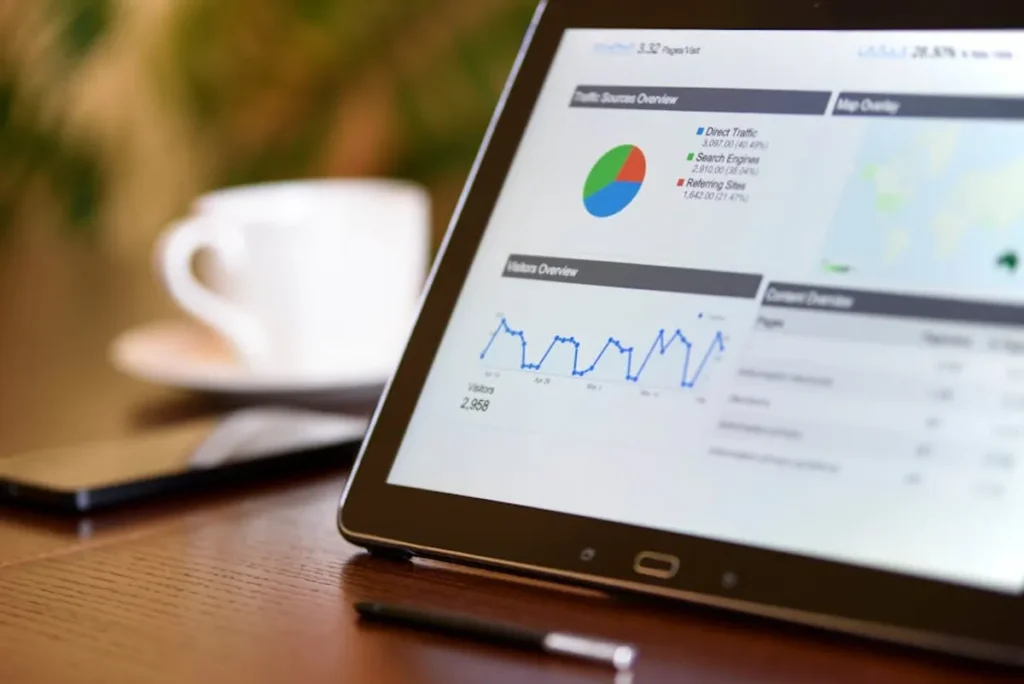
For any business operating within defined geographic boundaries, understanding local search performance is not merely an advantage—it is a foundational requirement. Unlike broad national or global SEO, local search demands a granular perspective, particularly when tracking rankings by specific city and within the highly visible Map Pack. A robust local rank tracker provides the precise data needed to navigate the competitive landscape of local search, revealing exactly where a business stands in the eyes of its most relevant customers.
The core challenge for local businesses lies in the hyper-localized nature of user intent. A search for "plumber near me" in Chicago yields vastly different results than the same query in Dallas, even for national chains. Furthermore, Google's local algorithm prioritizes proximity, prominence, and relevance, making city-specific and Map Pack visibility distinct from general organic search. Without a system to monitor these specific metrics, businesses are left guessing about their local market penetration and the effectiveness of their localized SEO efforts.
The Imperative of City-Level Rank Tracking
Tracking rankings at a city level moves beyond general regional data to provide actionable insights tailored to a business's actual service areas or customer base. For a multi-location enterprise, or even a single business serving a distinct metropolitan area, knowing how a specific location ranks in its immediate vicinity—or even a neighboring suburb—is critical. This precision allows for targeted optimization, where resources are allocated to improve visibility in the exact locations that generate revenue.
Consider a restaurant chain with multiple outlets. While the corporate site might rank well nationally for general terms, individual locations need to dominate local searches like "restaurants in Downtown Austin" or "pizza near South Congress." City-level rank tracking isolates this performance, highlighting which locations are thriving locally and which require focused attention on their Google Business Profile (GBP) optimization, local content, or citation building.
Granular Geo-Targeting for Accuracy
Effective city-level rank tracking relies on the ability to simulate search queries from precise geographic points. This involves more than just selecting a city from a dropdown menu. Advanced local rank trackers employ sophisticated geo-targeting mechanisms, often simulating searches from specific IP addresses within a city, or even by exact latitude and longitude coordinates. This ensures that the ranking data reflects what a potential customer physically located in that area would actually see, accounting for Google's dynamic local algorithm adjustments based on user proximity.
Without this granular approach, businesses risk optimizing for a generalized "local" ranking that doesn't accurately represent their visibility within their actual service radius. For instance, a business located on the border of two cities might rank well in one but be virtually invisible in the other, a nuance only revealed by precise city-level tracking.
Navigating the Local Map Pack Ecosystem
The Map Pack, or Local Pack, is the highly coveted three-business listing that appears prominently at the top of Google search results for many local queries, often above organic listings. Its visual nature, complete with business names, ratings, addresses, and quick links for directions or calls, makes it an undeniable driver of local traffic and conversions. Securing a spot in the Map Pack is often more impactful for local businesses than a top organic ranking further down the page.
Tracking Map Pack performance is distinct from traditional organic rank tracking because the ranking factors differ significantly. While organic SEO principles still apply, Map Pack visibility is heavily influenced by signals directly related to a business's Google Business Profile. Monitoring changes in Map Pack positions allows businesses to directly correlate their GBP optimization efforts, review management strategies, and local citation building with tangible results.
Key Signals for Map Pack Visibility
Achieving and maintaining Map Pack visibility hinges on several critical factors, which a local rank tracker helps monitor and contextualize:
- Google Business Profile Optimization: Complete and accurate information, relevant categories, high-quality photos, and regular posts.
- Review Management: Quantity, quality, and recency of customer reviews, along with prompt business responses.
- Proximity: The physical distance of the business to the searcher's location.
- Relevance: How well the business's GBP matches the user's search query.
- Prominence: A business's overall authority and reputation, both online and offline, including links, articles, and citations.
Tracking Map Pack rankings allows businesses to see which of these signals are contributing to success or identifying areas where competitors are outperforming them. For example, a sudden drop in Map Pack ranking might prompt an audit of recent reviews or a check for new, highly-rated competitors in the immediate vicinity.
Pro Tip: Do not rely on manual "incognito mode" searches for local rank checks. Google's personalization and dynamic geo-location make manual checks unreliable and inconsistent. Automated local rank trackers provide objective, consistent data points essential for accurate performance analysis and strategic adjustments.
Integrating City and Map Pack Data for Strategic Insights
The true power of a local rank tracker emerges when it combines city-level organic rankings with Map Pack performance. This integrated view provides a holistic understanding of a business's local search footprint. For instance, a business might rank #1 organically for a key term in a specific city but be completely absent from the Map Pack for the same term. This indicates a strong content strategy but a potential weakness in GBP optimization or local citation building.
Conversely, a business might consistently appear in the Map Pack but struggle with organic visibility further down the page. This suggests a need to bolster website content, internal linking, and broader SEO signals. By cross-referencing these data points, local SEO professionals can develop a more nuanced and effective strategy, prioritizing efforts where they will have the most significant impact on acquiring local customers.
Selecting a Local Rank Tracker: Essential Capabilities
When evaluating tools for local rank tracking, specific features are non-negotiable for obtaining commercially useful data:
- Hyper-Local Geo-Targeting: Ability to track rankings from specific cities, postal codes, or even exact street addresses/coordinates.
- Dedicated Map Pack Tracking: Distinct reporting for Map Pack positions, separate from organic search results.
- Competitor Monitoring: Track local competitors' rankings for the same keywords and locations.
- Historical Data & Reporting: Long-term data retention to analyze trends and demonstrate performance over time, with customizable reports.
- Keyword Management: Support for a large volume of local keywords, including variations and long-tail queries.
- Scheduled Updates: Daily or weekly ranking updates to catch fluctuations and react quickly.
These capabilities ensure that the data collected is not only accurate but also actionable, allowing businesses to make informed decisions about their local SEO investments.
Maximizing Your Local SEO Performance with Data
Implementing a local rank tracker for city and Map Pack performance is not a set-it-and-forget-it task. It requires consistent monitoring and data-driven adjustments to your local SEO strategy. Regularly review your ranking trends, paying close attention to any sudden drops or gains. Use this data to identify areas for improvement in your Google Business Profile, local content, or review acquisition efforts.
By understanding your precise local visibility, you can allocate marketing budgets more effectively, target local ad campaigns with greater accuracy, and ultimately connect with more customers who are actively searching for your products or services in their immediate vicinity. The insights gained from granular local rank tracking translate directly into a competitive advantage in local markets.
Frequently Asked Questions
Why is city-level tracking different from general local tracking?
City-level tracking provides a highly specific view of your rankings within a defined urban or suburban area, often down to neighborhoods or zip codes. General local tracking might cover a broader region or state, which can mask performance issues in critical, smaller geographic markets where your customers are actually located.
How often should I check my local rankings?
For most businesses, daily or weekly tracking is ideal. Daily checks allow for quick identification of algorithm shifts or competitor movements, while weekly checks provide a stable overview of trends without being overwhelmed by minor fluctuations. The frequency depends on the competitiveness of your market and the pace of your SEO changes.
Can Map Pack rankings impact organic search visibility?
While distinct, strong Map Pack rankings can indirectly benefit organic visibility by increasing brand awareness, driving website traffic (through GBP links), and accumulating positive reviews, all of which are positive signals that Google considers for overall prominence and authority.
What factors most influence Map Pack rankings?
The primary factors influencing Map Pack rankings are the completeness and optimization of your Google Business Profile, the proximity of your business to the searcher, the relevance of your GBP to the search query, and the overall prominence of your business (including review quantity/quality, local citations, and website authority).